Check your aquariums! Zebra mussels have been found in aquarium plant products - KRQE News 13
Check your aquariums! Zebra mussels have been found in aquarium plant products - KRQE News 13 |
| Check your aquariums! Zebra mussels have been found in aquarium plant products - KRQE News 13 Posted: 05 Mar 2021 07:15 PM PST  Weird - Off Beat  Zebra mussel inside the aquarium plant product called "moss balls." (Courtesy: Texas Parks & Wildlife Department) AUSTIN (KXAN) — A plant meant for aquariums in the United States and imported from the Ukraine could contaminate your aquarium with invasive zebra mussels, according to the Texas Parks and Wildlife Department. The plants are called "moss balls" but technically they aren't moss. Instead, they're a type of algae used for decoration and to help improve aquarium health. They're often used in betta fish aquariums and are sometimes sold as "Beta Buddy Marimo Balls," "Mini Marimo Moss Balls" and "Marimo Moss Ball Plants." TPWD says stores should remove these items from shelves, and customers should dispose of them. People can safely dispose of moss balls by drying or freezing them or by putting them into a plastic zipper bag and then tossing them in the trash. "Zebra mussels have already been introduced into many Texas lakes and are causing changes to the ecosystem along with damage to boats, water supply and control infrastructure," said Brian Van Zee, TPWD Inland Fisheries regional director. "It is important that we take all possible precautions to prevent them from being introduced elsewhere." Zebra mussels are small shellfish that have triangular, brownish shells often with zebra stripes, hence the name. They could be attached to or growing inside the moss balls. TPWD said in a release, "they are very small, growing to no more than an inch in size, and the individuals found on the moss balls in Texas were less than a quarter of an inch long." Which stores might be selling these moss balls?Petco and PetSmart are two of the stores TPWD named in its release: "Petco stores have been working diligently to remove these products from their shelves, and I have informed PetSmart of the presence of zebra mussels within this product," said Jarret Barker, TPWD assistant law enforcement commander. "We urge any other pet and aquarium or retail store selling these 'moss balls' to remove this product from shelves and discontinue future sale." Don't dump your aquarium water!Did you know you shouldn't simply dump your aquarium water? That's one of the ways that invasive species often end up in our lakes and waterways. TPWD urges aquarium owners to never dump their tank water. They have an online resource to show people how to dispose of their aquarium water safely. |
| Posted: 04 Mar 2021 06:48 PM PST 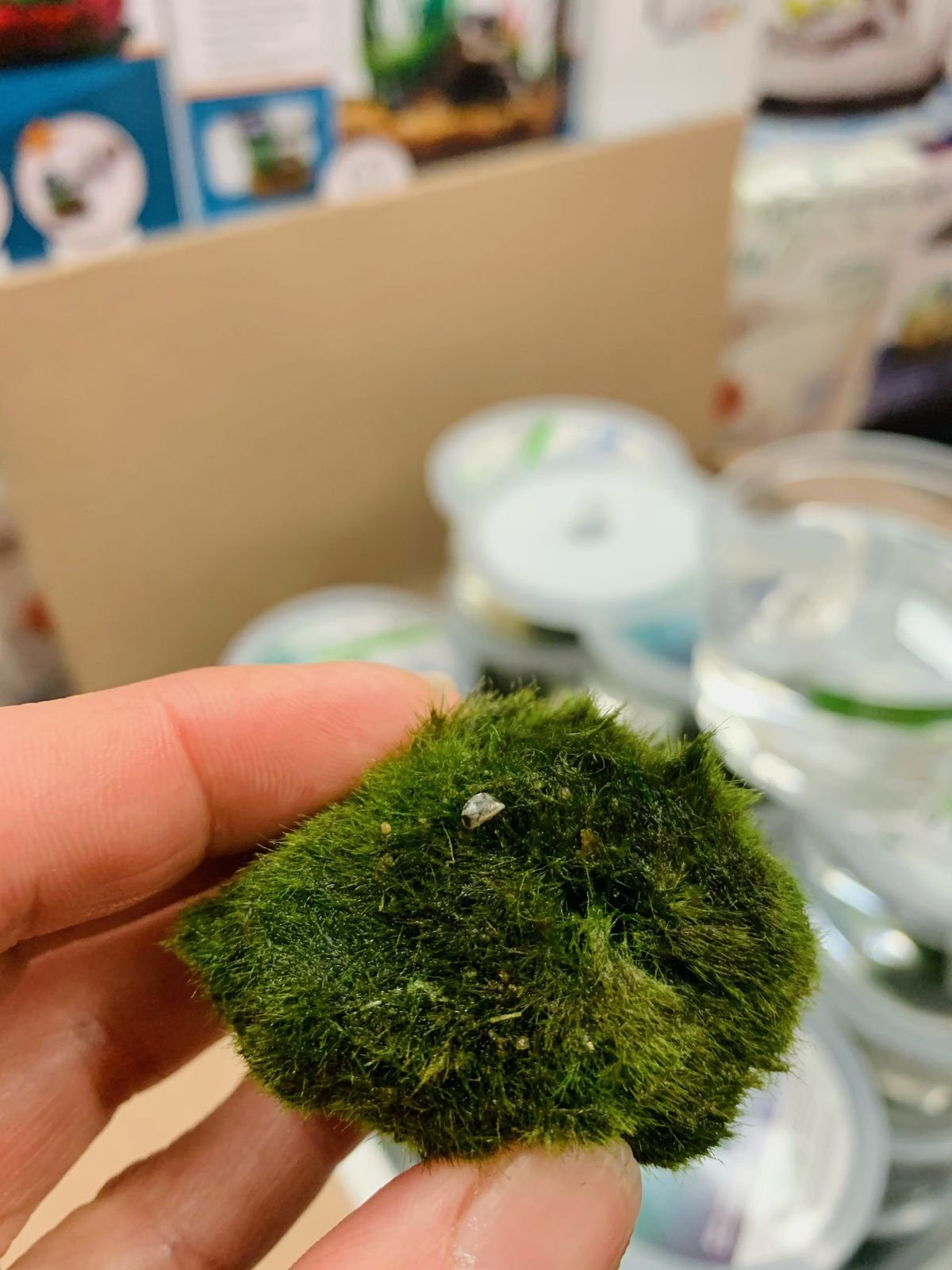 An aquatic invasive species of mussel that can wreak havoc ecologically and economically was found in a Coeur d'Alene Petco store Wednesday. The Zebra mussel was found attached inside a "Betta Buddy" brand Marimo moss ball. Zebra mussels in the moss balls have also been found in PetSmart stores. The local discovery followed reports of similar finds in Seattle and Oregon. Wildlife officials found mussels in an Oregon Petco, as did an employee at a Seattle Petco, according to an Oregon Department of Fish and Wildlife news release. Montana officials also found mussel-infested moss balls across the state, according to a Montana Fish Wildlife and Parks news release. Colorado wildlife officials also found the mussel. The moss balls were imported from Ukraine to a distributor in California and were shipped to pet stores nationwide, according to the Montana news release. The facility that imports the moss balls has been quarantined and all shipments of moss balls have stopped. The nationwide discoveries stemmed from a report filed with the U.S. Geological Survey by a Seattle Petco employee, according to a Washington Department of Fish and Wildlife news release. "I work in the aquatics department, and almost every shipment of these moss balls that I have unpacked for the past two months has had mussels nestled in the moss balls," the employee spotted them on Feb. 9 and reported them to USGS on Feb. 25. This week, Washington Department of Fish and Wildlife officials investigated the Seattle store and removed 56 Marimo moss balls and visually confirmed the presence of at least 12 zebra mussels, according to an agency news release. "We don't have any invasive mussels in our waterways here yet," said Jamie Brunner, the Coeur d'Alene Lake Management Supervisor for the Idaho Department of Environmental Quality. "But if they get established, I don't know that anybody has been successful at eradicating them, and they can really mess up infrastructure like dams. They are a very expensive problem, both ecologically and economically." Upon notification from WDFW, Petco immediately paused the sale of all Marimo aquarium moss balls at Petco locations and online and placed them in quarantine, according to a statement from the company. A friend of Brunner's found the mussels in the Coeur d'Alene store and took photos, which Brunner shared with The Spokesman-Review. Petco has worked proactively with state authorities to remove the moss balls, said Nic Zurfluh, the Invasive Species section manager for the Idaho State Department of Agriculture. The contaminated moss balls in Coeur d'Alene were found Wednesday and removed from the shelf, Zurfluh said. "It's definitely a nationwide issue," he said. "It's all over." Idaho officials found both dead and living mussels, he said. State agencies urge consumers to not dump aquarium tank water or dispose of moss balls in natural water bodies. Instead, the Idaho State Department of Agriculture advised either freezing the balls for 24 hours or boiling the moss balls for one minute before disposing of them in the trash. For moss balls that have already been in an aquarium, the ISDA recommends cleaning the entire aquarium. To clean the aquarium, remove any fish, and dispose of the water in a sink or toilet (municipal wastewater is treated to kill pathogens, and septic tanks are self-contained underground). Then apply household bleach (one cup of bleach per gallon of water) and let it set for 10 minutes before disposing of water down the sink or toilet. Also disinfect filters, gravel and structures with a solution of bleach before disposing of the water down the toilet. Another option is to use water that is 140 degrees to flush and coat the tank and accessory surfaces, according to the agency. Zebra mussels originate in the Caspian Sea. They were introduced into the Great Lakes sometime in the late 1980s via ballast water in transport ships. Within five years, they'd colonized the Great Lakes and the Mississippi River. "I'm incredibly worried about this," said Julian Olden, a professor in the School of Aquatic and Fishery Sciences at the University of Washington. To date, the best defense against zebra and quagga mussels has been through boat inspections, he said. "This is a pathway that hasn't been on the radar, and if the distribution of these contaminated moss balls is broad, we now have all these potential sources," Olden said. "And it just takes one." In 2011, Olden and other UW scientists published a study looking at the aquarium trade in Seattle as a potential source for introduction of nonnative aquatic species. They found that the trade "may be a significant source of past and future invasions in the Pacific Northwest" and recommended "enhanced public education programs, greater regulation of the aquarium industry, and improved legislation of nonnative species in the ornamental trade." It is estimated zebra and quagga mussels incur $5 billion in damages every year throughout the Great Lakes and the Mississippi Delta. The tiny mussels can clog pipes, foul dams, and cover beaches, and they can travel from one part of the country to another by hitching rides on trailered boats and other watercraft. The mussels can live for up to a month out of water. In addition to wreaking economic havoc, the mussels can change the ecology of lakes and rivers by choking out other types of lake life, throwing the ecosystem out of balance and creating diseases. Washington and Idaho have developed a defensive network of check stations aiming to slow or stop the spread of the species. In 2016, invasive mussel larvae were confirmed in two Montana reservoirs, including the famed fishing waters of the Missouri River. Increased boat inspections in Washington, Idaho and Montana started in 2017. Officials are particularly concerned about the creatures infesting the Columbia River Basin. It's estimated that if the mussels entered the Columbia River system, it would cost between $10 and $25 million per hydroelectric facility per year to keep the facilities running. Correction: Due to a reporter's error when the Petco employee in Seattle spotted and reported the mussels was incorrect. The story has been updated. |
| You are subscribed to email updates from "aquarium tank online" - Google News. To stop receiving these emails, you may unsubscribe now. | Email delivery powered by Google |
| Google, 1600 Amphitheatre Parkway, Mountain View, CA 94043, United States | |

Comments
Post a Comment