Jax Fish House & Oyster Bar expansion set to dazzle - Colorado Springs Independent
Jax Fish House & Oyster Bar expansion set to dazzle - Colorado Springs Independent |
| Jax Fish House & Oyster Bar expansion set to dazzle - Colorado Springs Independent Posted: 04 Jan 2020 11:34 AM PST click to enlarge 
In June, 2019, the Indy announced the impending arrival of Jax Fish House & Oyster Bar. To recap in brief: Jax is part of Boulder-based Big Red F Restaurant Group, a 25-year-old company that also operates Lola Coastal Mexican, The Post Brewing Co., The West End Tavern, Zolo Southwestern Grill, and Centro Mexican Kitchen. Jax — which specializes in sustainably sourced seafood, being the first Colorado restaurant certified by the Monterey Bay Aquarium Seafood Watch — also has locations in Boulder (the original spot), Fort Collins, Lodo Denver, Glendale, and Kansas City. click to enlarge 
This Colorado Springs location opens Tuesday, Jan. 7, with the first brunch service beginning Sunday, Jan. 12. I got a media preview on Jan. 3, with a mini tasting and tour through the significantly overhauled facility with chef/founder Dave Query. (Random related fun fact: I served and shift managed in this spot circa 1999/2000 when I was in college and it was Il Vicino — so this tour for me was more of a "oh, the brewery used to be there, and fermentation tanks here ... how the hell did you get the pervasive wood-oven pizza smell out?" type tour.) click to enlarge 
Back in June, Query told me he's been waiting for the right Springs location for 20 years, saying: "We're excited to have found a location we think suits the brand and allows us to do something in the way we do it well — which is small." Considering that well-established brand, he speaks modestly as we sit together in the new space. "We don't see ourselves as a big fish in a small pond; we work twice as hard to gain our cred," he tells me. "We've got proving to do." click to enlarge 
click to enlarge 
Executive Chef Sheila Lucero joins us for a moment, while dropping off stellar samples of Oysters Rockefeller (traditional style) and oysters chargrilled in Creole butter with garlic and parsley and grana padano cheese. She serves on the Monterey Bay Aquarium Seafood Watch's Blue Ribbon Task Force, networking with others around the U.S. on sustainability concerns. Jax's menu features a "note on sourcing" on its back page that explains their ethics and practices. Jax Fish House & Oyster Bar expanding into Springs Jax Fish House & Oyster Bar expanding into Springs By Matthew Schniper Side Dish Guests can get in on the action via the Jax Oyster Club, through which you can order from the same providers and pick up oysters at Jax for dining at home. 
I also meet newly appointed beverage director Alan Henkin, who brings experience from The Wolf's Tailor, Basta and Frasca. In addition to overseeing a fairly extensive bottle and glass wine list, he's curated around a dozen beers for this location (including a couple local breweries) and a dozen cocktails, broken into martini, NOLA Classics and house infusion categories that capture both traditional and longtime favorite Jax drinks. click to enlarge 
Something I may circle back on later is any extra significance of Jax's arrival on the scene — call it Boulderization maybe? — as in late 2018 I opined about the Denverization of the Springs with the arrival of Denver Biscuit Company and Dos Santos. More recently, I caught all kinds of holy hell from some Indy readers when I used the opening of The Roswell to examine the current state of the Springs food scene, questioning if we were making any backward progress (concurrent with other hopeful openings, in this case.) I'll conclude here by simply saying Jax will be one to watch in 2020, and the early samplings show a lot of promise. |
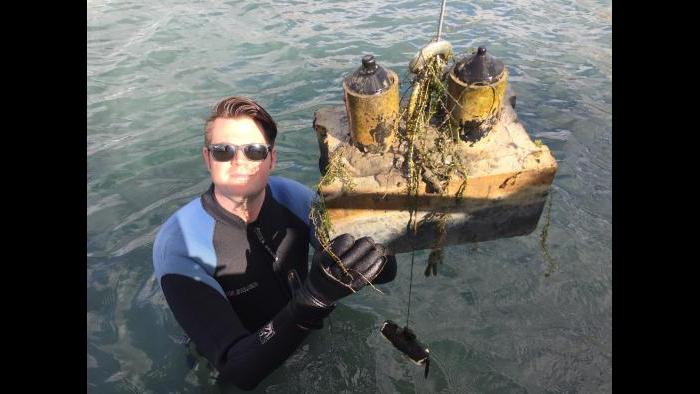
| New Shedd Scientist Studies Impact of Invasive Species in Lake Michigan - WTTW News Posted: 02 Jan 2020 03:42 PM PST The Great Lakes are home to an estimated 180 invasive species – fish, invertebrates and plants that have an impact on native species. Shedd Aquarium has a research team that studies Lake Michigan and other bodies of water to understand and protect aquatic populations. Thanks to our sponsors:The newest member of that team is a freshwater biologist Scott Colborne. Colborne was hired to study invasive species in Lake Michigan and how they influence local fish populations and generally have a domino effect on the food web. The ultimate goal is to have a better picture of the overall wellbeing of the lake and to create strategies to maintain a healthier ecosystem. Below, a Q&A with Colborne. Tell us about your background. I'm from Ontario and I did my education at the University of Guelph. I've worked in freshwater fish biology for my entire career. I was at the University of Windsor for three years where I did research on the Detroit River and the fish population in that part of the Great Lakes, and I moved over to Ann Arbor, Michigan, for two years where I was working on a lake sturgeon conservation project where we were tracking their movement between Lake Huron and Lake Erie. What kind of fieldwork do you do? There's quite a variety of different types of fieldwork. I've worked mostly with two aspects. I've looked at food webs, where I've gone out to both collect fish and take tissue samples and then do long-term diet studies with a process called stable isotope analysis, which is kind of like "you are what you eat." Everything in your tissues indicates what you've been eating long-term. So that's a lot of fieldwork, going out collecting invertebrates and fish of different sizes. And then I've also been doing tracking work for habitat use and movement, and that's where we go out, collect fish, do a very quick surgery on-site, where we put a tag in their body cavity and then we release them and then we maintain equipment over time to track them.
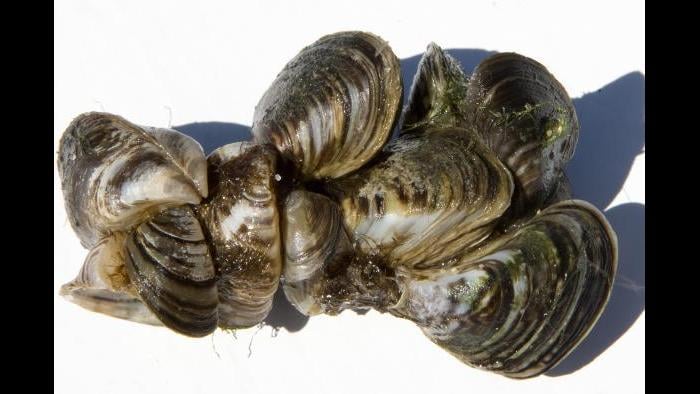
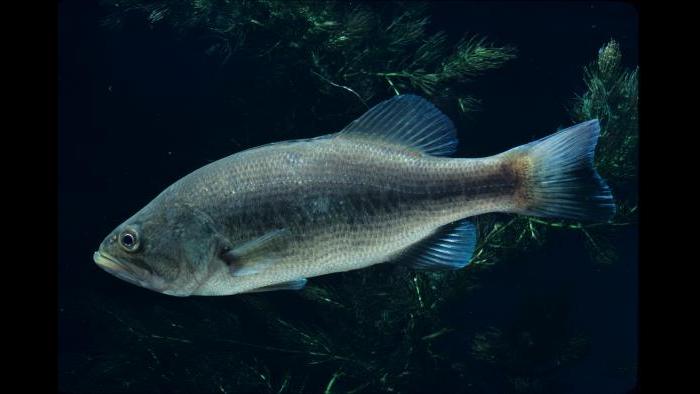
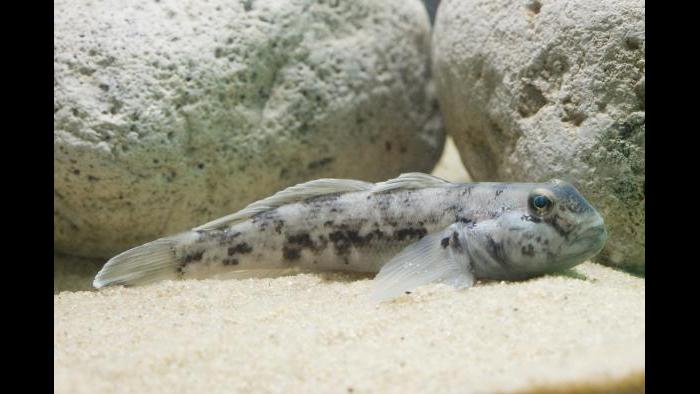
You've written about a "domino effect" of invasive species. Explain. The zebra mussels and quagga mussels and round goby are great examples of multiple dominos coming into the system and changing things. The mussels arrived first and they've really impacted the food web because they filter feed plankton out of the water, so they are reducing that food source for native fish, and so that was the first domino that fell. And then round goby which comes from the same area as the zebra mussels and the quagga mussels, they were the next round of invasion, and they're actually a natural predator for these mussels. So they start eating these mussels in the Great Lakes. And then native fish consume round goby potentially and so that's another domino, where we're seeing successive invasion events that are changing the food web in new ways and now on the near-shore areas, the round goby is available to eat for large-mouth bass and small mouth bass. How many invasive species are in the Great Lakes? There are more than 180 non-native species across the Great Lakes region and that includes not just fish but also invertebrates – so mussels – there's also smaller invertebrates, some plankton species. It also includes plants. A major part of Shedd's efforts and management agencies around the Great Lakes is, we've done a really good job of identifying what invasive species are here, but it's what they're doing here and how they're becoming part of the ecosystem … we're still just scratching the surface on figuring out how native and invasive species interact with each other. Do each of the Great Lakes have the same challenges? One lake is not the same as the other. This region covers quite a large geographic scale, so what's happening in Lake Ontario is not necessarily what's happening in Lake Michigan or Lake Superior, so we need to look at each of these lakes independently and really understand not just what species are present but how they're making use of the habitat and how they are interacting with each other. What partnerships has Shedd Aquarium made to help them investigate invasive species? The Great Lakes is a world-class example of partnerships and research efforts that have been ongoing. Shedd Aquarium and my research will be continuing that, both Canadian and U.S. agencies, governments and universities, associations like the Shedd. So we are part of a big partnership that is developing throughout the region and has been working really well. You just started this job in December. What's your first order of business? My first interest is to start getting into what's happening in the near-shore around Chicago area, especially with round goby because they have really altered the prey baseline for all of the other large fish in the area. Over the past 20 years a recreational fishery for small-mouth and large-mouth bass has really started to explode in Chicago. It's becoming a really popular recreational pastime, and I think, based on information in other parts of the Great Lakes, is that these bass may actually be eating round goby and this is possibly allowing their population to go through an explosion, but we need to establish that that's the actual case. So I'd like to get out there and look at the bass population, how they're doing, what they're foraging on – are they actually making use of round goby and that will tell us what's happening right around Chicago. And there are financial incentives to conservation as well, correct? The Great Lakes aquatic wildlife is a $7 billion a year fishery. There's estimates of $16 billion in tourism funds that come to the Great Lakes region because of the fisheries and people just wanting to come and see this area, so there is a huge economic value to maintaining a healthy ecosystem here. Thanks to our sponsors:Thanks to our sponsors: |
| You are subscribed to email updates from "big fish aquarium" - Google News. To stop receiving these emails, you may unsubscribe now. | Email delivery powered by Google |
| Google, 1600 Amphitheatre Parkway, Mountain View, CA 94043, United States | |

Comments
Post a Comment